Owners usually call us about brick for one of three reasons: chips of brick face on the roof or the patio, sand trickling out of the joints when they brush them, or a quote from someone else that says the chimney has to come down. Each of those is, at bottom, a water story. Brick soaks up rain, the wet face dries and lets go, mortar washes out of the joints a little every winter, and once the joints are open the next storm gets further in. This post compares the two repairs that answer that damage, so you can tell which one your Fountain Valley chimney is asking for.
Two different jobs
Repointing keeps the brick and replaces the joints. The crew cuts out the worn mortar, fills the joints with new mortar chosen to suit the old brick, and tools the face so water runs off rather than sitting in a ledge. Flaked bricks can be cut out one at a time and swapped for matching ones. The chimney stays standing the whole time.
A rebuild takes the damaged part of the chimney apart and lays it again. On most houses here that means the section above the roof, where weather hits hardest, and sometimes a few courses below the roof line. The old brick is cleaned and reused where it is sound; new brick fills in where it is not. A rebuild always ends with a new top slab and new metal at the roof seam, since both come off with the brick.
How we decide which one fits
The choice comes from the brick, not from a preference. On a visit we look at:
- Depth of the damage. If the joints are worn but the bricks are hard and firmly bedded, repointing holds. If bricks rock when pressed, or a knife goes deep into the joint with no resistance, the wall is too far gone to fill.
- How many faces are flaking. A few spalled bricks can be swapped. A whole face that has lost its skin will keep shedding after new joints go in.
- Lean and gaps. A chimney leaning away from the house, or a gap opening between brick and siding, means the stack has moved. Fresh joints will not pull it back.
- Old patching. Hard grey mortar smeared over soft old joints traps water behind it and makes the brick around it crumble faster. Sometimes the patch has to come out before we can judge what is under it.
- Shaking. Southern California chimneys have ridden through more than one strong earthquake, including the 1994 quake. Cracks that run through the bricks, rather than around them, point toward a rebuild.
What each one costs
We set both figures once we have stood beside the brick. Neighbours with matching stacks often get very different numbers, since wear hides until you press on it. What drives the figure:
| What we measure | Repointing | Rebuild |
|---|---|---|
| Area of brick affected | Square feet of joints cut and filled | Number of courses taken down |
| Brick condition | Count of bricks to swap | Share of old brick that can go back |
| Top of the chimney | Kept if sound | Always renewed |
| Roof seam metal | Reset if needed | Always renewed |
| Roof and height | Staging and access | Staging, access and debris removal |
If the brick work is the cause of a leak, and nothing more than some joints and a few faces is involved, it may fall inside our leak repair range of $545 to $3,250. Anything larger gets its own written figure.
To have the brick looked at and priced, ask for a masonry visit on the form. Let us know what you have noticed, whether chips, sand, a stain or a lean, and roughly when the roof was last replaced. We bring that into the visit.
The case for repointing first
When the brick is sound, repointing is the cheaper, quicker and less disruptive job, and it keeps the original look of the house. It also buys time. We often repoint a chimney, fit a cap and seal the roof seam, and then watch it. If it stays dry for several winters, nothing more is needed.
The case for going straight to a rebuild
Repointing a chimney that has moved, or one where the bricks are soft right through, is money spent twice. The new joints crack along with the old brick, the water comes back, and the rebuild happens a few years later anyway. If the top of the chimney is loose enough that a strong shake could drop bricks onto the roof or a walkway, safety decides it.
The Fountain Valley pattern
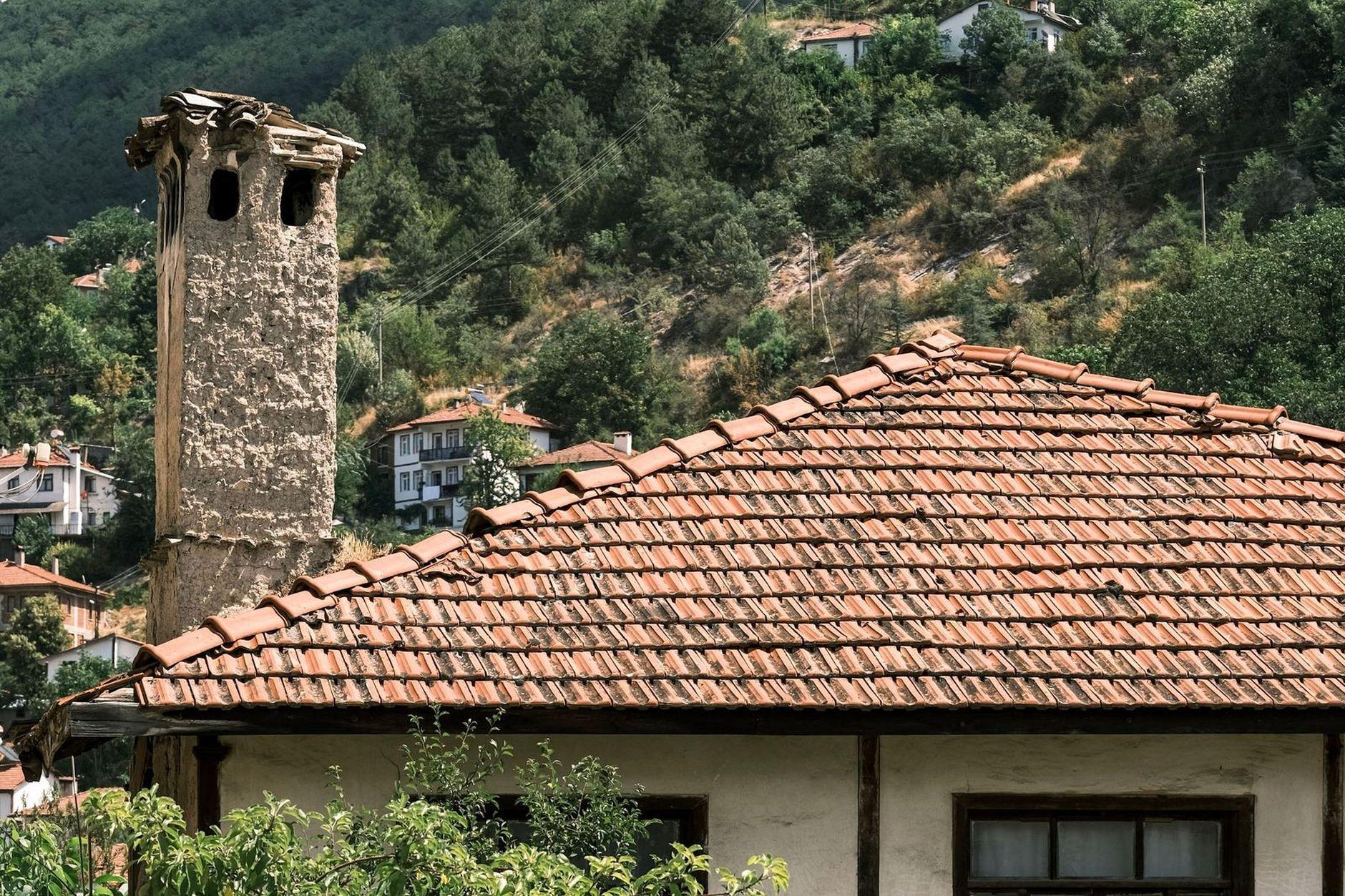
Many chimneys around Fountain Valley and Westminster are single-flue brick stacks that have been patched at least once. The usual picture is sound brick below the roof and tired brick above it, which is why a partial rebuild of the exposed section is common here, while full-height work is rare. Closer to the water in Newport Beach, salt in the air speeds up face damage on the ocean side of the stack.
Questions to put to anyone quoting
- Does the quote say how many courses come down, or just "rebuild"?
- What mortar will be used, and why does it suit this brick?
- Is a new top slab and new roof-seam metal included?
- Will old brick be reused, and how will new brick be matched?
- Do I get photos of the brick before and after?
The chimney masonry repair and chimney rebuilds pages go into the work itself, and our up to code repairs page shows how a large brick job can be split across stages.
What we suggest next
Chips on the patio rarely stop by themselves. Reach us through the contact page and we will look at the brick up close, tell you which of the two repairs it needs, and set the figure down in writing.
Want the Leak Found Rather Than Guessed At?
Decker Chimney Company starts at the mark inside, follows it to the roof and prices each fix on its own line. We cover Fountain Valley, Westminster, Newport Beach, Lakewood and the towns around them.